Follow us


Description: <div style="text-align: justify;">This is Part 2 of the Endianness Basics video series. In network programming Endianness is byte ordering used to store the data or to transmit the data over the medium. It is simply the method or protocol which decides which byte has to be stored at the lower order address and then the successive bytes storing in the memory. Generally the endianness is hardware dependent (there are few hardware where endianness is switchable) and there are two largely used methods viz. 1. Big Endian 2. Little Endian In Big endian notation, the most significant byte goes at the lower order address and the successive bytes take the higher order address places with lease significant byte at the most higher order place. Similarly, in Little endian notation, the least significant byte goes at lower order address and most significant byte at the higher order address. This video and the next video talk more about the endianness with some real life programming examples to explain how type casting of different length data works in big endian and little endian architectures. <br><br>Tags: endianness, big-endian, little-endian<br><br></div><br><style type="text/css">body { background: #FFF; } </style>
Tags: basics ,
Disclaimer: We are a infosec video aggregator and this video is linked from an external website. The original author may be different from the user re-posting/linking it here. Please do not assume the authors to be same without verifying.
Comments:
Login to post a comment

-
 Defeating Getimagesize() Checks In File Uploads
-
 Challenge 6: Digest Authentication Reloaded
-
 Challenge 5: Digest Authentication Attack
-
 Basic Authentication And Form Bruteforcing
-
 Http Basic Authentication Attack (Easy)
-
 Challenge 2: Http Form Attacks Reloaded
-
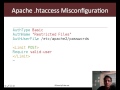 Http Verb Tampering Demo
-
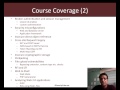 Web Application Pentesting Course Introduction
-
 Introducing Pentester Academy
-
 Hack Of The Day 13: Remote Shellcode Launcher: Testing Shellcode Over A Network
-
 Hack Of The Day 12: Pivots And Port Forwards In Scenario Based Pentesting
-
 Hack Of The Day: Customizing Shellcode For Fun And Profit
-
 Hack Of The Day: How Do I Run Untrusted Shellcode?
-
 Securitytube Linux Assembly Expert Exam Format
-
 [Slae] Writing An Custom Insertion Encoder
-
 [Slae] Execve Shellcode Stack Method
-
 [Slae] Shellcoding Basics
-
 [Slae] Using Libc And Nasm
-
 [Slae] Hello World In Assembly Language
-
 [Slae] What Is Assembly Language?
